Ketamine Therapy in Tucson, AZ: An Integrative, Physician-Guided Approach to Healing
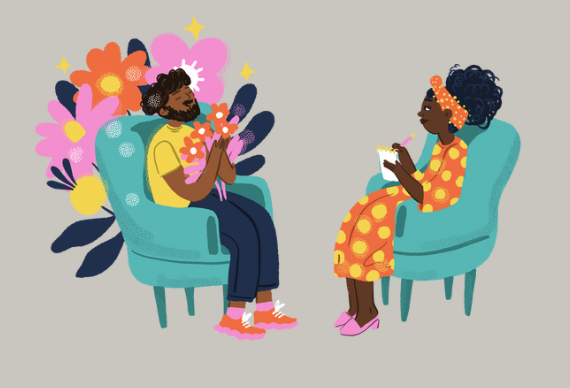
Ketamine Therapy in tucson
Most people who seek ketamine therapy in Tucson are not looking for something new. They are usually looking for something that finally works.
They have often tried multiple medications, years of therapy, lifestyle changes, supplements, and various forms of self work. Many understand their patterns intellectually, yet still feel stuck inside the same emotional and physiological loops.
Ketamine tends to enter the picture at that point. Not as a first step, but as a later one.
What ketamine therapy actually is
Ketamine is a medication that has been used in clinical medicine for decades. In mental health care, it is used at low doses to support people with depression, anxiety, trauma-related symptoms, and chronic stress.
From a physiological perspective, ketamine works primarily through the glutamate system, rather than serotonin or dopamine. This matters because glutamate plays a central role in how neural circuits form, stabilize, and change.
Ketamine increases synaptic plasticity. In practical terms, this means the brain becomes temporarily more flexible. Rigid patterns of perception and emotional response become less fixed. Thought loops that normally feel automatic can loosen.
This is why ketamine can feel different from standard psychiatric medications. It does not primarily suppress symptoms. It changes the conditions under which symptoms arise.
Why people in tucson are turning to ketamine therapy
In clinical practice, the people who respond most strongly to ketamine therapy often share a few features.
They tend to be highly reflective. They understand their history. They have insight into their trauma or mood patterns. Yet their nervous systems remain chronically activated or shut down.
In these cases, insight alone is not enough. The problem is not lack of understanding. It is that the brain and body are still organized around old threat patterns.
Ketamine can temporarily interrupt those patterns. It reduces activity in rigid default networks and increases connectivity across brain regions that do not usually communicate as easily.
For some people, this creates emotional access that has been unavailable for years. For others, it produces a sense of distance from internal narratives that normally feel overwhelming or absolute.
an integrative model of ketamine therapy
Ketamine can be delivered in several ways. In some settings, it is treated as a stand alone intervention. A medication is administered, the session ends, and the patient leaves.
That model works for some people. It is often insufficient for those with complex trauma, chronic anxiety, or long standing depression.
An integrative approach treats ketamine as part of a larger clinical process. This includes medical screening, psychological preparation, a supportive therapeutic environment, and structured integration afterward.
The medication creates a physiological window. What happens inside that window depends on context, support, and how the experience is processed over time.
Ketamine does not replace therapy. It alters the nervous system in a way that can make therapy more effective.
What the ketamine therapy process looks like
The process usually unfolds in stages.
First comes assessment. This involves reviewing medical history, psychiatric history, current medications, and overall stability. Not everyone is an appropriate candidate, and careful screening matters.
Then comes preparation. This phase is often overlooked, but it plays a major role in outcomes. Preparation helps orient the nervous system toward safety and reduces the likelihood of destabilizing experiences.
The ketamine session itself typically occurs in a quiet, low-stimulation environment. People remain conscious and aware. The experience may include changes in perception, emotional shifts, an altered sense of time, or a feeling of mental spaciousness.
Afterward, integration becomes the focus. This involves reflecting on the experience and connecting it to daily life. Integration may include psychotherapy, journaling, somatic work, or lifestyle adjustments.
Without integration, the effects of ketamine often fade. With integration, changes are anchored and tend to consolidate.
How ketamine therapy feels
There is no standard experience.
Some people feel deeply calm. Others experience emotional release. Some report visual imagery or symbolic material. Others notice subtle shifts that are difficult to describe.
Common effects include reduced rumination, increased emotional clarity, and a sense of being less identified with internal narratives.
These changes are not always dramatic. In many cases, they emerge gradually. The nervous system begins to respond differently to familiar stressors. Reactions that once felt automatic become easier to observe.
Safety and limitations
Ketamine therapy is generally considered safe when provided in a medical setting with appropriate monitoring. That does not mean it is risk free.
Certain conditions require caution, including cardiovascular disease, bipolar disorder, psychotic disorders, and active substance use. Medication interactions also matter.
Ketamine is not appropriate for everyone. It does not work for everyone. And even when it helps, it does not eliminate the need for ongoing psychological and physiological care.
It opens a window. It does not build the house.
How many sessions are needed
There is no fixed protocol that fits everyone.
Some people experience meaningful changes after a few sessions. Others require longer courses with continued integration work.
The number of sessions depends on nervous system patterns, psychological history, current stress load, and the quality of post-session support.
More sessions do not necessarily produce better outcomes. What matters more is how the experience is metabolized over time.
A different way of thinking about mental health treatment
Ketamine therapy sits at an intersection between neurobiology and subjective experience.
It works through identifiable physiological mechanisms. It also alters perception, emotion, and meaning in ways that are not easily reduced to metrics.
This dual nature is part of why it can be helpful for people who feel stuck between understanding their problems and being able to change them.
Ketamine does not solve anything on its own. It changes the conditions under which change becomes possible.
Final thoughts on ketamine therapy in Tucson, AZ
Ketamine therapy is not a cure. It is not a shortcut. It is not a replacement for psychological work or nervous system regulation.
For some people, it becomes a turning point. For others, it is one useful tool among many.
Its value lies in its ability to temporarily reorganize how the brain processes experience. What happens next depends on how that reorganization is supported.
In that sense, ketamine therapy is less about the medication itself and more about what the nervous system is allowed to learn afterward.