Ketamine Therapy for Depression in Tucson, AZ
Ketamine therapy for depression in Tucson
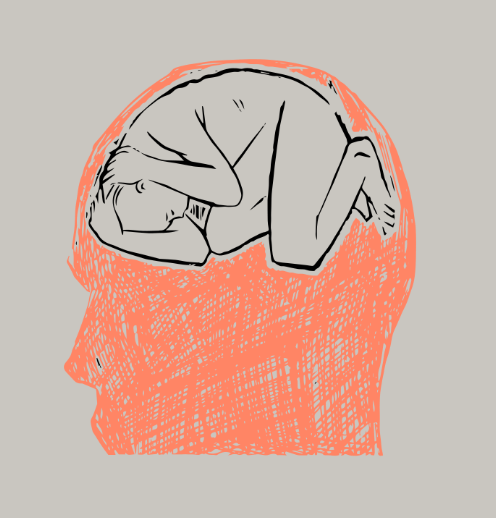
Most people who seek ketamine therapy for depression are not early in their process. They have usually tried several medications, sometimes for years. Many have done extensive therapy. They often understand their history and their patterns, yet the depressive state persists.
At that point, the question is no longer about insight. It is about whether the brain and nervous system are capable of changing the underlying structure that keeps generating the same emotional state.
Ketamine enters the conversation when depression feels less like a mood and more like a fixed physiological condition.
How depression behaves in the nervous system
From a clinical perspective, depression is not just low mood. It is a pattern of neural activity that becomes self-reinforcing over time.
Certain brain networks become overly dominant, especially those involved in self-referential thinking, rumination, and threat detection. Emotional flexibility decreases. Cognitive and emotional responses become more predictable and less adaptive.
This is why many people with depression describe feeling trapped inside their own minds. The content of their thoughts may vary, but the structure of how the brain processes experience remains rigid.
Traditional antidepressants work primarily through monoamine systems such as serotonin and norepinephrine. For some people, this helps. For others, it produces minimal change, partial improvement, or emotional blunting.
Ketamine works through a different system entirely.
Why ketamine is different for depression
Ketamine primarily acts on the glutamate system. Glutamate is the main excitatory neurotransmitter in the brain and plays a central role in learning, memory, and neural plasticity.
Under ketamine, activity in rigid neural networks decreases. At the same time, connectivity between different regions increases. This temporarily alters how information flows through the brain.
In practical terms, the brain becomes less locked into its usual patterns. Thought loops lose some of their automatic quality. Emotional responses become less tightly bound to old interpretations.
This is why some people describe ketamine as creating distance from depressive thinking rather than directly eliminating it. The thoughts may still exist, but they feel less absolute and less compelling.
What ketamine therapy looks like for depression
Ketamine therapy for depression is not simply about administering a medication. It is a structured clinical process.
It usually begins with a thorough assessment of medical history, psychiatric history, current medications, and overall nervous system stability. This is essential, as ketamine is not appropriate for everyone.
Preparation follows. This phase helps orient the nervous system toward safety and reduces the likelihood of destabilizing experiences. It also clarifies expectations, which matters more than many people realize.
The ketamine sessions themselves take place in a calm, low-stimulation environment. Music is provided to augment the journey. People remain conscious and aware. The experience may involve changes in perception, emotional shifts, or a sense of mental spaciousness.
After the session, integration becomes central. This involves processing what occurred and translating it into daily life. Without integration, the effects of ketamine often fade. With integration, changes tend to consolidate.
How ketamine affects depressive symptoms
The most common changes people notice include:
Reduced rumination
Less emotional heaviness
Increased psychological flexibility
Greater ability to observe thoughts without becoming immersed in them
Subtle improvements in motivation or engagement
For some people, these changes are immediate. For others, they unfold gradually over days or weeks.
Ketamine does not usually produce constant elevated mood. Instead, it tends to reduce the rigidity of depressive states, making emotional movement possible again.
This distinction matters. Ketamine does not replace emotional work. It alters the conditions under which emotional work can happen.
Treatment-resistant depression
Ketamine is most often considered in cases of treatment-resistant depression, meaning depression that has not responded adequately to multiple standard interventions.
In these cases, the problem is rarely a lack of effort or compliance. It is usually the case that the underlying neural patterns have become deeply entrenched.
Ketamine can temporarily disrupt those patterns. It does not erase them, but it can loosen their grip.
This is why ketamine is often described as creating a window rather than delivering a cure. The window allows new experiences, interpretations, and behaviors to take hold more easily.
What happens inside that window determines long-term outcomes.
Safety and limitations
Ketamine therapy is generally considered safe when provided in a medical setting with appropriate screening and monitoring. That does not mean it is risk-free.
Certain conditions require caution and may be contraindications, including cardiovascular disease, bipolar disorder, psychotic disorders, and active substance use. Medication interactions must also be considered.
Ketamine does not work for everyone. Some people experience minimal benefit. Others find the effects meaningful but temporary.
It is not a replacement for therapy, lifestyle changes, or nervous system regulation. It does not resolve attachment patterns or life circumstances. It does not remove stress.
It changes how the brain processes experience.
How many sessions are needed
There is no standard number.
Some people notice improvement after a few sessions. Others require longer courses with structured integration. Some benefit initially and then plateau.
The number of sessions depends on baseline nervous system state, trauma history, current stress load, and the quality of post-session support.
More sessions do not guarantee better outcomes. Repetition without integration often leads to diminishing returns.
Many find that they may need periodic tune-ups at times after having completed a series of treatments. Others will return when symptoms begin to return, or in anticipation of difficult circumstances.
Final thoughts on ketamine therapy for depression in Tucson
Ketamine therapy for depression is not dramatic for everyone. It is not always profound. It is not a shortcut.
For many people, its value lies in subtle but meaningful shifts. The nervous system becomes less rigid. Thoughts feel less absolute. Emotional states become more fluid.
Ketamine does not remove depression. It changes the brain’s relationship to it.
What happens next depends on how that change is supported.